
English| EUR
Suggested for you
More currencies
Choose a language
Deciding what time is the best for whale watching depends heavily on lighting and sea conditions within the Eyjafjörður fjord. Visitors heading to Árskógssandur frequently ask how the time of day impacts marine activity and photography opportunities on the water. This what time is the best for whale watching guide provides the tactical details needed to schedule a successful departure.
Quick answer
The optimal arrival window at Sjávargata 6 is between 09:00 and 15:00. Morning and early afternoon excursions consistently offer the calmest sea conditions and the most favorable light for spotting marine life. Operating hours run daily from 09:00 to 18:00, but midday departures generally yield the clearest visibility across the fjord.
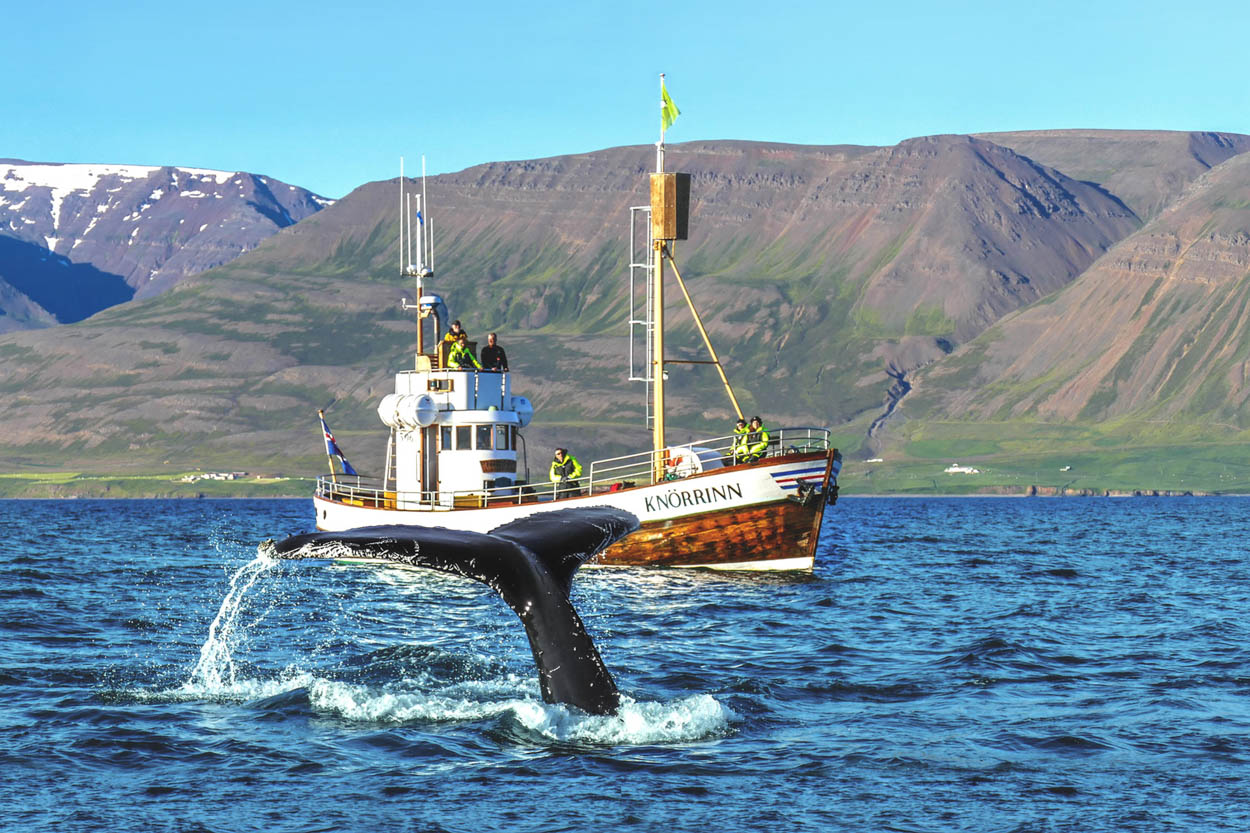
The narrow, deep waters of Eyjafjörður create a unique microclimate that heavily dictates marine behavior along the North Iceland coast. Travelers arriving at the small fishing village of Árskógssandur quickly learn that environmental variables shift significantly as the day progresses. Determining what time is the best for whale watching often begins with understanding how sunlight angles and diurnal wind patterns affect the fjord, rather than attempting to track the specific feeding schedules of humpback whales or minke whales. Because cetaceans must surface to breathe regardless of the clock, the challenge of locating them lies entirely in human visibility and passenger comfort while navigating the North Atlantic. Finding the ideal hour for spotting cetaceans requires analyzing the local geography and historical weather patterns. During the height of summer, the Arctic region benefits from extended daylight, stretching the potential operational window well into the evening hours. However, the most consistent window for calm water routinely occurs during the first half of the day. Morning departures typically encounter a resting atmosphere in the fjord, long before thermal winds have the chance to pick up in the late afternoon. For those prioritizing photography on their morning or afternoon marine tours, the low morning sun illuminates the blowing spouts of marine life with high contrast against the dark surrounding mountains. By midday, the overhead light penetrates much deeper into the water column, allowing passengers standing on the wooden decks of traditional oak boats to clearly track white flippers moving swiftly beneath the surface. This vertical lighting provides a distinct advantage for observing animals just before they break the water. The immediate proximity of Árskógssandur to the prime feeding grounds means that vessels spend far less time commuting and significantly more time actively tracking marine mammals. This distinct geographic advantage reduces the urgency of booking the earliest possible slot, as even midday and early afternoon departures offer ample observation time in the core habitat. Guides and marine biologists working on these local vessels utilize regional communication networks to monitor animal movements continuously, meaning success rates remain reliably stable throughout the scheduled operating hours. Ultimately, selecting a specific departure comes down to balancing personal travel itineraries with the desire for a smooth, stable ride. For anyone still questioning what time is the best for whale watching, the data heavily favors scheduling a trip during the hours before 15:00, when the Eyjafjörður ecosystem is most easily observed without the interference of late-day surface chops.
“Because cetaceans must surface to breathe regardless of the clock, the challenge of locating them lies entirely in human visibility and passenger comfort while navigating the North Atlantic.”
The best arrival window for whale watching in Árskógssandur is between 09:00 and 15:00. Tours during this timeframe benefit from superior natural light and generally calmer sea conditions.
10°C to 15°C, mild winds
Peak season for humpback whale sightings and consistent daylight hours.
2°C to 8°C, variable conditions
Early season opportunities with cool air and migratory species movement.
0°C to 7°C, increasing winds
End of season period offering quiet waters and potential orca sightings.
—
Recommended for calm seas and optimal visibility for wildlife observation.
Verdict: For the best experience, plan your visit for a weekday between 09:00 and 15:00 during the months of June or August.
The whale watching operations at Árskógssandur maintain a consistent schedule throughout the week to assist with your travel planning. The facility is open daily, providing regular access for scheduled tours.
The whale watching departure point is located at Sjávargata 6, 621 Árskógssandur, Iceland. The most direct way to reach the site is by driving north from Akureyri.
Route 82 from Akureyri toward Árskógssandur
Strætó route 78 to Árskógssandur
Plan your travel to ensure you arrive within the best arrival window of 09:00–15:00. On-site parking is available near the harbor area for visitors.
Prepare for your Árskógssandur whale watching tour by packing appropriate gear for North Iceland's coastal conditions.
Everything you need to know about what time is the best for whale watching
When considering what time is the best for whale watching, we recommend planning your visit for the morning or early afternoon. These periods generally offer the most favorable light and calmer sea conditions for spotting marine life in the Eyjafjörður fjord. If you are wondering what time is the best for whale watching, please note that our operational schedule runs from 09:00 to 18:00 daily. Planning your trip within this window ensures you can coordinate with the scheduled boat departures. The entrance fee is 12,990 ISK per adult, which includes snacks and refreshments provided during the excursion. This flat rate covers the tour experience provided by North Sailing. For the best experience, the recommended arrival window is between 09:00 and 15:00. This timeframe maximizes your opportunity to enjoy calm waters before potential afternoon weather shifts. Identifying what time is the best for whale watching is easier when you focus on these early hours for better visibility of Humpback whales and other local wildlife. Morning and early afternoon tours are often preferred because the sea state tends to be most stable, which is helpful for photography and comfort. Visitors often ask what time is the best for whale watching; arriving early allows for a smoother check-in process at our Sjávargata 6 location. You can view availability and secure your spot for an Árskógssandur boat trip by visiting the official website. Online booking is the most efficient way to manage your reservation. To prepare for your ocean adventure, bring warm layers, a windproof jacket, and a camera. Even in summer, the wind on the fjord can be chilly, and proper attire ensures you remain comfortable while scanning the horizon.